Is It Normal to Feel Stiffer and Less Mobile As You Get Older?
I hear some version of this in my office all the time.
“I guess I'm just getting older.”
Maybe you've noticed that getting up from the floor isn't quite as effortless as it once was. You don't turn your head as far when you're backing up the car. Reaching behind you to do up a dress feels harder. Or you wake up feeling stiff and need a few minutes to get moving.
It's easy to assume that all of this is simply the price we pay for getting older.
And certainly, our bodies do change with age.
But I think we sometimes give aging credit for things that have as much—or more—to do with how we've been using our bodies.
Our bodies get good at what we ask them to do. And they have a harder time doing things we don't ask them to do regularly
One of the fascinating things about the human body is its ability to adapt.
If you regularly ask your body to lift something heavy, your muscles and nervous system adapt to that demand. If you challenge your balance, your body gets better at balancing. If you regularly move your joints through their available ranges of motion, you continue giving your brain information about those movements.
But adaptation works in the other direction too.
If you stop getting down onto the floor, eventually getting back up may become more difficult. If you rarely reach overhead, rotate your spine or challenge your balance, those movements may become less familiar and more difficult over time.
Sometimes what feels like “I'm getting old” is at least partly “I haven't asked my body to do this in a while.” Jobs that require us to be sedentary, lots of time spent in a car, sitting while we wait for our kids to finish soccer practice and hitting the couch after a long day to watch Netflix all reduce the resiliency of our movement.
Strength matters—but it isn't the whole story
I'm a huge advocate for strength training as we get older. Maintaining muscle and strength becomes increasingly important for our health, independence and ability to keep doing the things we love.
But strength is only one piece of the puzzle.
We also need mobility, balance, coordination and confidence in our movement.
And all of those depend on communication between the brain and body.
Your brain is constantly receiving information from your joints, muscles, eyes and balance systems about where you are and how you're moving. It uses that information to coordinate everything from walking across an uneven trail to stepping off a curb or catching yourself when you trip.
That's one reason I look beyond the place that hurts when I'm assessing someone in my office.
I'm interested in how your spine moves, how you balance, how different parts of your body work together and whether you've gradually lost movements you used to have.
Pay attention before you lose something you value
Often we don't notice a gradual loss of function until it interferes with something we actually want to do.
Maybe you can't turn your head comfortably enough to check your blind spot. Maybe gardening has become harder. Perhaps you're hesitant to get onto the floor because you're not sure you'll get back up easily.
Or maybe it's something bigger.
You want to hike on your next vacation. Ski with your family. Do sports with your teenagers or play with your grandchildren. Travel after retirement. Keep living independently.
Those are the things that matter.
The goal isn't to move like you're 25 forever. It's to maintain as much strength, mobility, balance and capacity as possible so that your body continues to give you options.
Don't automatically blame your age
Getting older is inevitable.
Becoming progressively less capable isn't something we should simply accept without asking why.
If you've noticed changes in your mobility, balance or the way your body moves, pay attention to them. Sometimes identifying what has changed gives us an opportunity to work on it before it becomes a bigger limitation.
And if this is something you've been thinking about, it's exactly what we'll be talking about at our next “Strong for Life” workshop on November 5…
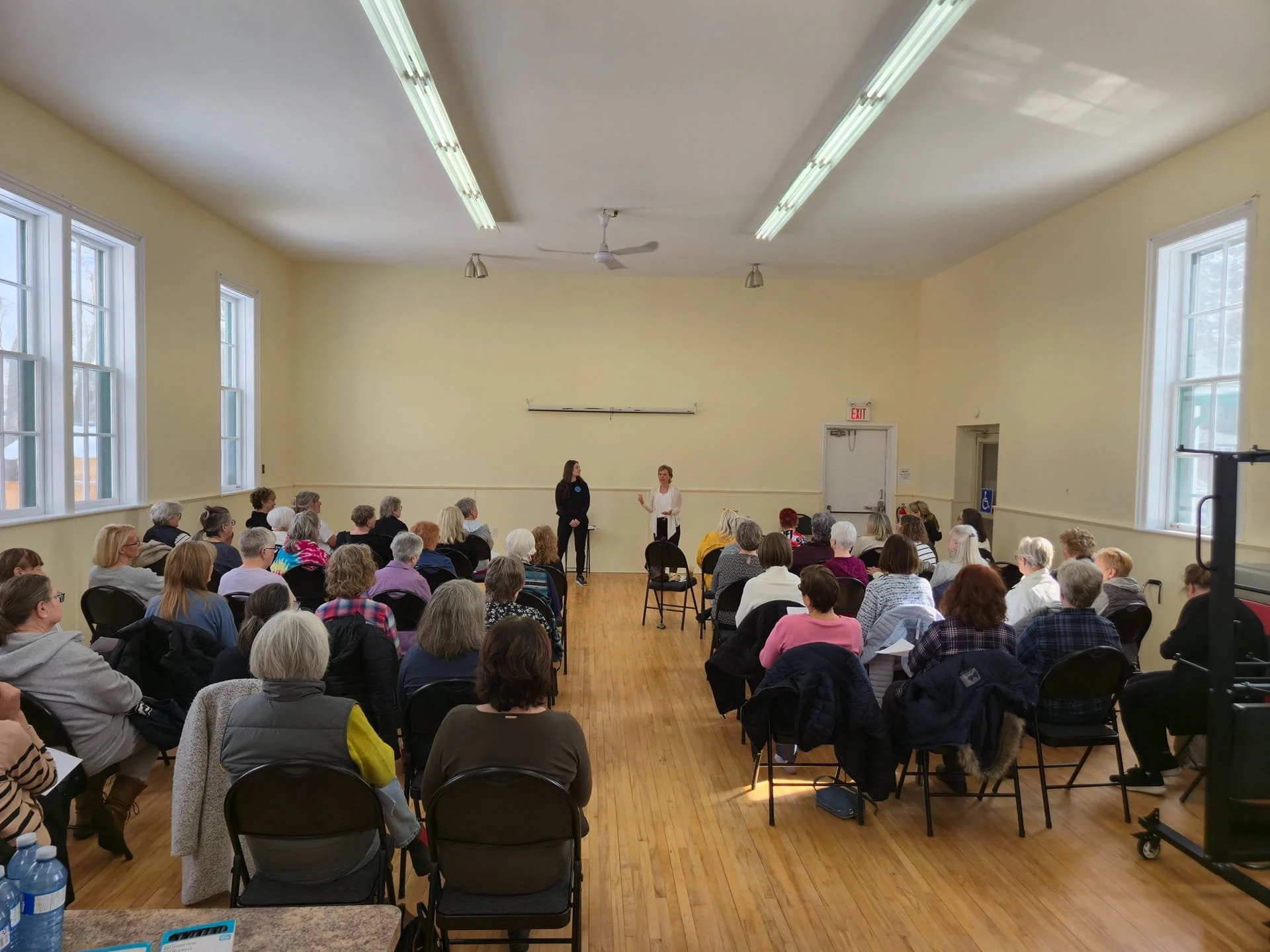
Live Workshop - Strong for Life
When? Thursday, November 5th, 2026 - 6:30 PM - 8:00 PM
Where? Port Perry United Church, 294 Queen St.
For women of all ages who want to better understand how strength and movement help us build and maintain capable, resilient bodies throughout our lives.
Because the goal isn't to stop aging.
It's to keep doing the things you love as you do.
Additional Resources:
VIDEO: 4 Movements Every Woman Over 50 Should Test - Watch here
BLOG: Why Do I Keep Getting Sick? A Different Way to Think About Your Health - Read here
1:1 CARE: Our Female & Menopause Care - Learn more